Friday, 24 June 2016

Office cake culture is 'danger to health'

Having cake at work to celebrate colleagues' birthdays, engagements or just surviving the week is a danger to health, a senior dentist argues.


Health editor, BBC News website
Office cake
Image: Thinkstock

Prof Nigel Hunt, from the Faculty of Dental Surgery, at the Royal College of Surgeons, says "cake culture" is fuelling obesity and dental problems.
At the organisation's annual dinner for dentists, he will say workplace temptation stops people losing weight.
And staff should be rewarded with fruit, nuts or cheese instead.

Sugar rush

In the speech, he will say: "Managers want to reward staff for their efforts, colleagues want to celebrate special occasions, and workers want to bring back a gift from their holidays.
"But for many people the workplace is now the primary site of their sugar intake and is contributing to the current obesity epidemic and poor oral health."
He will say nearly 65,000 adults every year need hospital treatment for tooth decay.
Prof Hunt will say: "Cake culture also poses difficulties for those who are trying their hardest to lose weight or become healthier - how many of us have begun such diets only to cave in to the temptation of the doughnuts, cookies or the triple chocolate biscuits?"

Fruit platter

While he does not believe office cake should be banned, he will say it should be purchased in smaller quantities and consumed only with lunch.
Dentists recommend cutting down on sugary or starchy foods between meals as they give bacteria fuel to produce acids that decay teeth.
At the dinner, which is being rounded off with mint panna cotta, British strawberries and chocolate soil, Prof Hunt will say: "Ideally office workers should consider other alternatives altogether like fruit platters, nuts, or cheese.
"Responsible employers should take a lead and avoid such snacks in meetings."

Wednesday, 22 June 2016

Exercising After a Task Improves Memory

Here's another reason to hit the gym


by Alexandra Sifferlin

Working out might keep the brain sharp, and according to a new study, exercising four hours after learning a task can improve memory.

In the new report, published Thursday in the journal Current Biology, researchers found that exercising four hours after a memory task increased brain patterns associated with memory, and helped people retain information better than people who exercised immediately after or people who did not work out.

Seventy two people partook in a picture-location memory task for about 40 minutes. Then, the people were either randomly assigned to 35 minutes of exercise right away, exercise four hours later, or no exercise at all. Two days later, the people came back to see how well they remembered what they had learned, and their brains were scanned. The people who exercised hours later had better recall and stronger and more clear activation in the areas of their brain associated with memory retrieval.

“There is good evidence from animal data that the release of certain neurotransmitters—dopamine and norepinephrine—leads to a biochemical cascade leading to the production of so called plasticity related proteins,” says study author Guillén Fernández, director of the Donders Institute for Brain, Cognition, and Behaviour at Radboud University Medical Center in an email to TIME. “These proteins help stabilize new memory traces, which would otherwise be lost. Physical exercise is at the start of this sequence, because it is accompanied by the release of dopamine and norepinephrine.”

The idea that regular exercise has an impact on brain health, including memory, has been reported in many studies and Fernández says the new report adds to the evidence by showing a single session of exercise can aid in memory retention.

The number of people in the study is small, so it’s hard to say whether people should start pacing workouts exactly four hours after learning something important. Still, the study authors argue that their study is a proof of principal that exercise should be considered as a strategy for long-term memory.


Tuesday, 21 June 2016

People ignore healthy options despite experience from loved ones, study shows

UK adults are not taking steps to reduce the chances of developing illnesses, even someone they know has experienced a serious condition, according to research released today by Royal London.

21 JUNE 2016 | CINTIA CHEONG

Heart disease is the least-ignored condition, with 55% of people taking steps to avoid it.

The life insurer believes this is because they don’t know what to do or don’t believe there is anything they can do.

Based on a survey of 2,093 UK adults, almost nine in 10 (85%) know someone who has been diagnosed with cancer, heart disease, diabetes, dementia, Alzheimer’s, multiple sclerosis or a stroke.

However, 70% have not taken action to reduce the chances of developing dementia or Alzheimer’s. More than half (58%) has not done so to avoid suffering a stroke.

This is followed by cancer (56%) and diabetes (56%). Meanwhile, more than two fifths (42%) have not taken steps against heart disease.

Commenting on this, Trisha Macnair, community doctor at Milford Hospital and Royal Surrey County Hospital, argues “there is so much” that people can do to stay healthy and help prevent serious conditions.

“They may have a vague idea of a few things they should be addressing, but even if they witness a loved-one battling with illness, this is often still not enough to motivate them to protect themselves,” she said.

Macnair is also calling on more action from policymakers and health authorities to encourage people to improve their health, such as facilitating gym access with funding or raising tax on alcohol to reduce consumption.

Dementia and Alzheimer’s are the illnesses where respondents are least confident of knowing how to reduce their risks of developing, with 59% stating they don’t know how to or don’t think there is anything they can do.

Cancer is the second biggest condition where 51% of people demonstrated limited confidence, followed by stroke (44%), heart disease (25%) and diabetes (25%).

Debbie Kennedy, head of protection for Royal London Intermediary, said the findings showed a link between people taking action against developing illnesses and the instances of these falling, “making a strong case for the nation to start taking some simple steps to lead a healthier lifestyle”.

Heart disease is the least-ignored condition, with 55% of respondents having taken steps to avoid it and only 11% saying they do not know how to do so.

Royal London added deaths caused by disease of the circulatory system in the UK were down 4.1% from 2012 to 2014, according to the British Heart Foundation.

The research also found that as people get older, they are more likely to have taken preventative measures.

Those aged 55 and over are the most likely to have taken steps to reduce their chances of developing them, while people aged 25-34 and 35-44 are the least likely to do so.

Macnair said younger people tend to push health to the back of their mind because they had “other more exciting things to focus on”.

“Younger people especially tend to feel invincible and don't want to dwell on health issues or imagine they might one day develop a chronic illness,” she said.


Wednesday, 8 June 2016

Exercise Slows Brain Aging By 10 Years

Being more active can be an effective way to combat memory and cognitive problems


by Alice Park

We know that exercise is good for the body and the brain. But actually being physically active, at least on a regular basis, isn’t always easy.

For days when you just don’t want to break a sweat, there’s new motivation in the form of scientific evidence: physical activity can slow brain aging by as much as 10 years, reports a new study published in the journal Neurology.

It’s among the first studies to actually put a number on how beneficial exercise can be for the brain. The researchers asked a group of 1,228 men and women of diverse racial and ethnic backgrounds living in Manhattan about their regular exercise habits. They also answered questions that tested their cognitive abilities, including their memory, organization, reasoning and thinking speed. Five years later, they performed the same tests on about half of the study group.

People who reported doing more physical activity showed higher scores on cognitive tests—consistent with previous studies linking more exercise to better brain health. But when the researchers adjusted for the effect that factors like high blood pressure, diabetes and heart disease can have on brain function, the link disappeared. Conditions like these could impair blood flow to the brain and therefore compromise cognitive functions, says Dr. Clinton Wright, associate professor of neurology and public health sciences at University of Miami and senior author of the study. “That suggests that people with low physical activity levels also had a greater burden of those risk factors,” he says.

He and his colleagues then focused just on people in the study who didn’t have these blood flow risk factors, and compared their cognitive scores at the beginning and end of the study. They found similar trends showing that people who exercise more had higher cognitive scores, while those who were less physically active tended to have lower scores. This time, even after accounting for the contribution of possible confounding factors, they found that this trend remained strong in two areas in particular: thinking speed and memory of specific past events.

They also found that people who exercised less showed sharper declines in their cognitive scores than people who were more active. The drops were equivalent to the declines found during normal aging over about 10 years, they concluded.

The data doesn’t prove that exercise can actually reverse or prevent a slowdown in higher level thinking skills. But it does suggest that physical activity may help people with blood flow issues to the brain, such as stroke patients, maintain their cognitive status. Wright is already studying such a group of patients who will wear activity monitors and be randomly assigned to a physical exercise program or not to see whether there is any difference in their test scores over time.


Tuesday, 7 June 2016

The truth about poo: we’re doing it wrong

Who knew sitting on the toilet was bad for you? In her best-selling book Charming Bowels, microbiologist Giulia Enders explains how to go to the loo


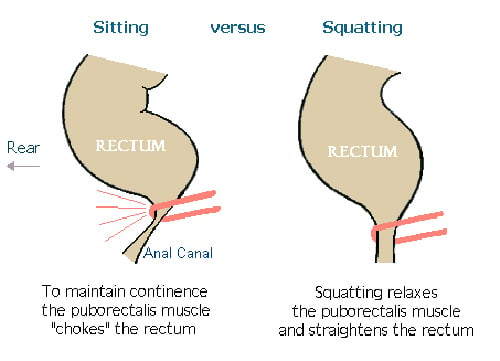
The gut is not designed to 'open the hatch completely' when we’re siting.


by Annalisa Barbieri

In my large Italian family, I grew up with the subject of poo, bottoms and constipation readily – and far too frequently – discussed at the dinner table. I’d be about to raise a raviolo to my mouth, only to hear how someone’s piles had popped, just that morning.
This doesn’t mean I’m anal (sorry) about the subject. It’s fascinating away from the lunch table. Late last year, I read that we are pooing all wrong: we should be squatting, not sitting, on a toilet bowl. Then a book called Charming Bowels by Giulia Enders caused something of a storm in its native Germany and I got fully immersed in the subject.

Enders is studying in Frankfurt for her medical doctorate in microbiology. She is utterly, charmingly obsessed with the gut, gut bacteria and poo. She writes and talks about her subject matter with such child-like enthusiasm, it’s infectious. And, yes, we have been pooing all wrong. Enders tells me about various studies that show that we do it more efficiently if we squat. This is because the closure mechanism of the gut is not designed to “open the hatch completely” when we’re sitting down or standing up: it’s like a kinked hose. Squatting is far more natural and puts less pressure on our bottoms. She says: “1.2 billion people around the world who squat have almost no incidence of diverticulosis and fewer problems with piles. We in the west, on the other hand, squeeze our gut tissue until it comes out of our bottoms.” Lovely.

But not to worry. Although you can climb on your toilet seat and squat (“It might be fun!”), we can iron out the kink by sitting with our feet on a little stool and leaning forward. The book even has a helpful drawing by Enders’ sister.

Then there are the sphincters. One of them we probably all know about – the one we open consciously – but there is also another, inner one, which is operated unconsciously. This ani internus sends a sample into the chamber between the inner and outer sphincter for the sensor cells to analyse and decide if it’s “safe” to fart or poo: “Yes, you’re at home. No, you’re in the office.” If it’s not safe, the sensors send it back in. But, if the inner sphincter is ignored enough times – say, because we are too shy to go to the loo for fear of being overheard – it sulks and can switch off. That’s one of the reasons constipation can occur.

Enders loves her inner sphincter. “Learning about those two sphincters really changed my perspective on life,” she says. “Those inner nerves don’t care for other people; they have no eyes or ears. Finally, something that only thinks of me! So, now I can go to the toilet anywhere. I worship that muscle!”

But the gut – and Enders’ book – is about far more than poo (although there is plenty there, about consistency, frequency, buoyancy, colour and laxatives, to keep the most forensic of scatologists happy). Enders’ big thing is bacteria. Our gut, which comprises two-thirds of our immune system, is full of the stuff. Two kilos’ worth, in fact. Our bacteria fight pathogens, are involved in blood-group development, digest our food, extract energy, produce hormones and can affect our mood. This gut/brain connection is a fairly new area of medicine, which Enders is very excited about. And she’s not alone: the American biochemist Rob Knight told science journal Nature that the field “offered at least as much promise as stem-cell research”.

“There is an increasing interest in the gut microbiota and health and disease,” confirms Dr Ayesha Akbar, consultant gastroenterologist at St Mark’s hospital in London. “There is a huge number of gut bacteria which, in health, maintain a balance. However, an imbalance has been linked to many chronic disorders, including inflammatory bowel disease and obesity. There is a suggestion that they may also be linked to psychiatric disorders and mood, with the majority of evidence coming from animal studies. Further research needs to be performed in humans in this area.”

Enders’ own interest in this link started when she was a new student. She met a man at a party whose breath was “the worst I have ever smelled – almost faecal”. The next day, he killed himself. “Could a diseased gut,” she wonders, “also have affected his psychological state?” She is keen, though, to point out that depressive disorders are multifactorial and not always connected to the gut; much more research is needed. The first human study of the effect of intestinal bacteria on the brain was only conducted only two years ago.

Enders admits that writing about a possible connection between our psychological state and the gut was “the hardest part of the book for me. A professor would have been scared of putting it in the book, but I feel people are being robbed if they don’t know about this research.”

As well as some serious issues, there are plenty of entertaining nuggets in the book. Did you know that our spit contains a painkiller more powerful than morphine: opiorphin? We have it only in minute quantities, so that we’re not off our heads all the time. Eating, though, releases more of the chemical and Enders wonders if this is one factor in comfort eating. And guess what? Your appendix – that bit of people always say is of no use – is actually made entirely of immune tissue and is a veritable larder of the best, most useful bacteria for the gut.

Enders’ book is full of stuff like this. I hate to say it, but it is the perfect toilet book. Thankfully, it has also been translated into Italian, so that’s Christmas sorted.


Monday, 6 June 2016

Bike to Work This Summer

Today ... is the perfect day to execute on your latent desire to begin biking to work.


We most often think about habits and resolutions in January, but when it comes to creating a bike commuting habit, summer rules because:
  • The weather is great. The sun is shining, temperatures in the morning are cool enough to prevent you from getting sweaty but warm enough that you don’t need to wear or pack a lot of gear. There is also loads of sunlight, so you don’t need to worry so much about dark roads.
  • Workplaces are more relaxed. Many employers take a more casual approach to summer, relaxing dress codes and hours. Depending on your equipment and your ride, you may decide you can gently ride to work in your business casual clothing and leave your spandex at home.
  • More people are on vacation. This translates into fewer meetings and (anecdotally, at least) less traffic. Fewer meetings mean you can plan your summer more effectively, and less traffic means a more relaxed commute.

With these three advantages in mind, here are some tips for setting yourself up for successful commuting this summer.

Give yourself a reason.


Why do you want to ride anyway? Do you want to be more active? Lose weight? Get some color? Whatever it is, starting with why and writing it down is the best way to stay motivated.

Make a plan.


If you know what you want out of your commute, you can set a sensible goal or habit. Goals look like “I will ride 60 days between now and Labor Day.” Habits look like, “I will look at my weather app each day morning after I get up and if there is no rain forecast, I will ride to work.” Goals for work for some, habits for others.

Address your worries.


Ask yourself what worries you. Are you concerned about being sweaty? Are you worried about your route? Securing your bike? What excuse are you going to use next week and what can you do to mitigate it?

When you were a kid on summer vacation, you probably spent a lot of time on two wheels. You may now be an adult, but this summer, you can recapture the feeling every morning.


Sunday, 5 June 2016

Five Top Health Benefits of Swimming


Swimming is hailed as a wonder sport, and it’s not difficult to understand why. But perhaps you still need a little persuasion to head to the local pool for a few lengths. After all, with it being so cold outside you’ll be more tempted to add layers – and lots of them – rather than peel them off down to a swimsuit. Ah, but remember that indoor pools are heated – and once you start swimming you’ll quickly warm up. Swimmers also have the advantage of a number of health boosters.

Top five health benefits of swimming


Strength builder: Think about dolphins. I doubt you’ve ever seen a fat dolphin! Now think about top swimmers. Ever seen a weak professional swimmer? That’s because the movement and exercise of swimming improves muscular strength and muscle tone. Health experts also tell us that  swimming increases bone strength, which is epically important for post-menopausal women.

Low on impact: Swimming, unlike most other aerobic sports, gives your body a good workout but without any pounding or impact to your skeletal system. How so? When your body is submerged in water, the body only needs to deal with a small percentage of your actual weight because the water is doing the rest. So if you have stiff muscles and sore joints, swimming is the perfect exercise.

Good for your heart: Research shows that 30 minutes of exercise per day, such as swimming, can reduce significantly reduce your chances of coronary heart disease and also reduce your blood pressure.

Longer life: A study at the University of South Carolina found that people who swam regularly suffer lower death rate. The research found that of the 40,000  men, aged 20 to 90, who were tracked fro 30 years, those who swam had 50% less likelihood of premature death. It’s thought that the same is true for women.

Easy breathing: Asthma sufferers can find it tough to exercise outdoors in winter, or cope with the dry atmosphere of gyms. However, swimming allows you exercise in moist air, which can help to reduce exercise-induced asthma symptoms. Some other studies have also shown that swimming can actually improve the condition overall.